Get a Quote Right Now

Edit Template

Blog

Read the latest news about Seo and Marketing from us

How Long Does Real Estate SEO Take to Work

How Long Does Real Estate SEO Take to Work

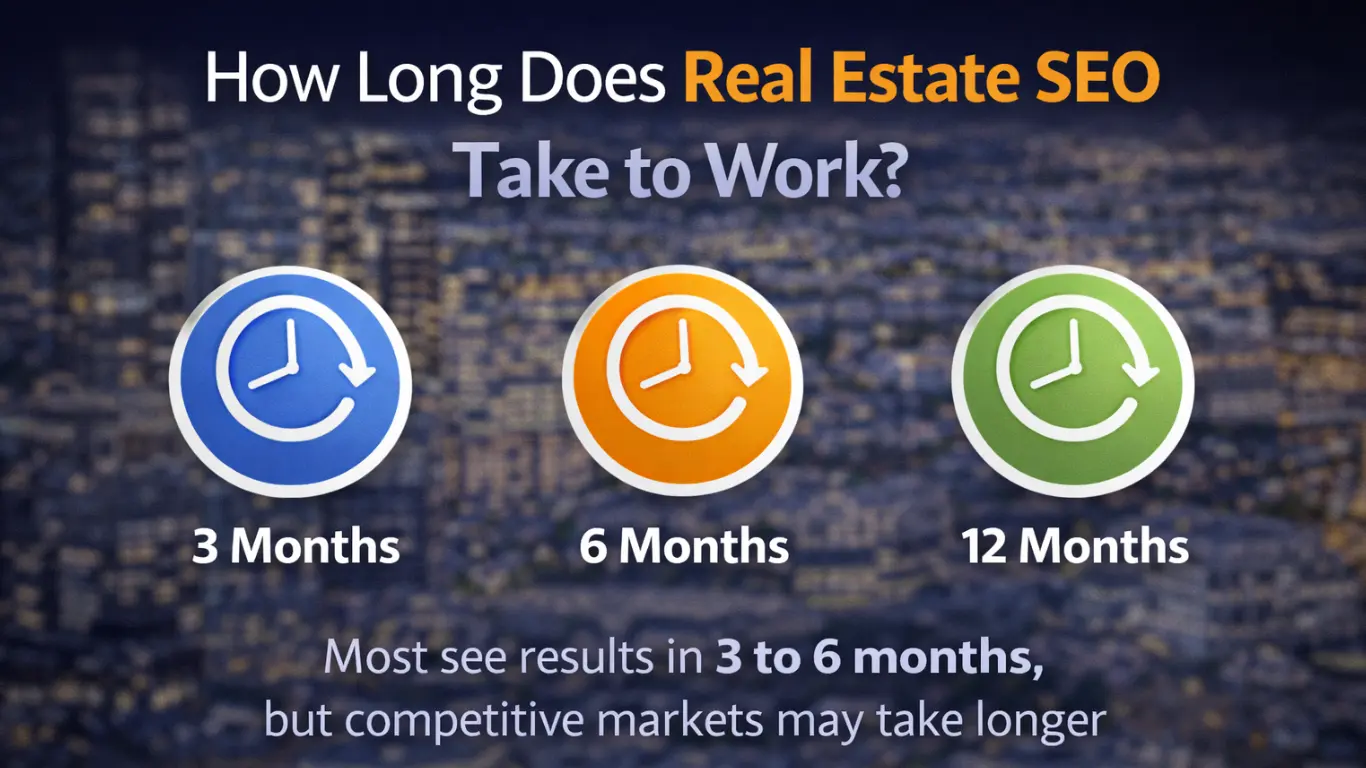
How Long Does Real Estate SEO Take to Work? A Realistic Timeline One of the most common questions real estate business owners ask is simple. “How long will SEO take to show results?” The honest answer is not instant, and it should not be. Real estate SEO is not a quick switch you turn on. It is a process that builds visibility, trust, and consistency over time. This article explains how long real estate SEO usually takes, what happens at each stage, and why some businesses see results faster than others. More importantly, it helps you understand what progress really looks like before rankings improve. Why Real Estate SEO Takes Time Real estate is one of the most competitive local industries online. Search engines treat real estate websites with caution because rankings influence major financial decisions. Google wants to be confident before promoting any page related to property, services, or lead generation. SEO takes time because Google needs to: Understand your website Compare it against competitors Measure user behavior Validate trust signals This is why timelines are closely tied to real estate SEO fundamentals, not shortcuts or hacks. What “SEO Results” Actually Mean in Real Estate Many people think SEO results mean ranking on page one immediately. That is not how SEO works. In real estate, SEO progress happens in layers. First, Google indexes and tests your pages. Then it adjusts positions slowly based on relevance and engagement. Leads often start appearing before top rankings. This is how how real estate SEO generates leads even while rankings are still improving. Understanding this prevents frustration and unrealistic expectations. A Realistic Timeline for Real Estate SEO Results Most real estate websites follow a similar pattern when SEO is done correctly. In the first month, Google begins indexing content and understanding structure. Rankings may appear on pages five to ten. This stage is about discovery, not traffic. Between months two and three, rankings usually move into pages three or four. Local visibility improves, impressions increase, and early leads may appear. Between months four and six, stable pages often reach page one or two for mid-competition keywords. Maps visibility strengthens when local SEO for real estate businesses and Google Maps SEO for real estate are aligned. Long-term growth continues beyond six months as authority compounds. What Can Speed Up Real Estate SEO Results Some websites move faster than others. SEO results usually appear sooner when: Website structure is clean Content matches search intent Internal linking is strong Local signals are clear Competition is moderate This is why website SEO for real estate plays such a critical role early on. A strong foundation allows Google to trust your site faster. What Slows Down Real Estate SEO SEO slows down when fundamentals are weak. Common delays happen due to thin content, copied location pages, inconsistent business information, or lack of topical depth. Another major delay comes from stopping too early. Many businesses quit SEO just before results compound. Real estate SEO rewards patience more than constant changes. Why SEO Timelines Differ by Market Not all real estate markets behave the same. Large cities with many agents require more trust and authority. Smaller or niche markets often move faster. This is why timelines depend on competition, not just effort. SEO is relative. You are not ranking in isolation. You are competing with established players. This is where a clear real estate SEO strategy makes the difference between slow progress and steady growth. How Google Maps Impacts SEO Timelines Google Maps results often appear faster than organic rankings. When your Google Business Profile is optimized and supported by content, calls can start earlier than website rankings. This is why many businesses see early wins from ranking real estate business on Google Maps while organic pages continue climbing. Maps visibility often acts as the first validation stage. Why SEO Is a Long-Term Advantage, Not a Short-Term Tactic Paid ads stop the moment you stop paying. SEO continues working. Once pages rank, they tend to hold positions longer than ads or social campaigns. Leads become more consistent. Cost per lead decreases. This long-term effect is why SEO aligns closely with real estate SEO services instead of short campaigns. SEO builds an asset you own. How OptinMark Sets SEO Timeline Expectations At OptinMark, we do not promise instant rankings. We explain what to expect at each stage and what signals indicate progress. Our focus is not just ranking positions, but lead quality and consistency. Our timelines are built around structure, intent, and trust. This approach ensures website SEO services for real estate deliver sustainable growth instead of temporary spikes. When Should You Re-Evaluate Your SEO Strategy? SEO should show signs of progress within three to four months. These signs include improved impressions, better keyword distribution, stronger local visibility, and early inquiries. If nothing improves at all, the issue is usually strategy or execution, not SEO itself. This is where clarity matters more than patience. Real estate SEO does not work overnight, but it works reliably when done correctly. Progress happens in stages. Trust builds before rankings. Leads often appear before page-one positions. If you understand the timeline and commit to the process, SEO becomes one of the most stable growth channels for real estate businesses. Want to Know How Long SEO Will Take in Your Market? Every city and every website is different. If you want a realistic timeline based on your competition, website, and goals, start with clarity. 👉 free SEO audit for real estate agentsWe’ll show you what stage you’re in and what to expect next. Contact Section Let’s get in touch Have a project in mind? Let’s get to chat. WhatsApp Now Call Us Now Email Us Now


Real Estate SEO Fundamentals

Real Estate SEO Fundamentals

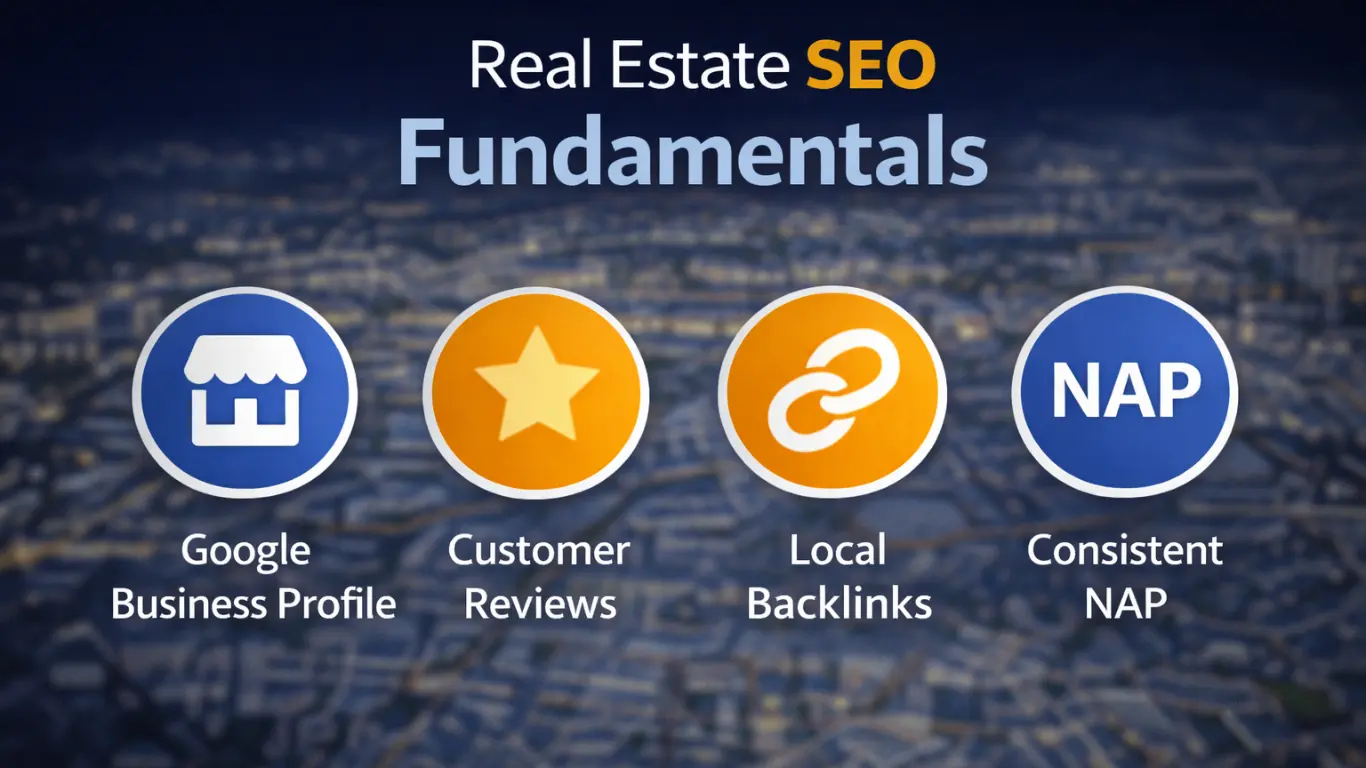
Real Estate SEO Fundamentals: What Every Agent Must Get Right First Real estate SEO does not fail because SEO is ineffective.It fails because the fundamentals are ignored or misunderstood. Many agents jump straight into tactics. They chase keywords, try quick fixes, or rely on tools without understanding how search engines actually evaluate real estate businesses. Real estate SEO fundamentals are about building clarity, relevance, and trust in a structured way. When these basics are right, rankings become easier. When they are wrong, nothing else works consistently. This guide explains the core principles behind real estate SEO, how Google evaluates real estate websites, and why fundamentals matter more than advanced tactics. What “SEO Fundamentals” Mean in Real Estate SEO fundamentals are the non-negotiable building blocks that support all rankings. For real estate, these fundamentals are not purely technical. They are closely tied to how buyers and sellers search, how local intent works, and how trust is established online. Search engines want to show real businesses that genuinely serve a location and help users make decisions. If those signals are weak or unclear, advanced SEO efforts rarely succeed. This is why fundamentals sit at the core of any strong real estate SEO strategy, not as an optional step. Search Intent Is the Starting Point Everything in SEO begins with intent. Buyers and sellers do not search randomly. They search with purpose, fear, urgency, and location in mind. Some are researching. Some are comparing. Some are ready to contact an agent. Real estate SEO fundamentals require aligning your website content with these stages. Pages must exist because people search for them, not because they look good on a sitemap. When intent is matched correctly, SEO supports how real estate SEO generates leads, not just visits. Website Structure Matters More Than Keywords Many agents believe SEO is about placing keywords on pages.In reality, structure matters more. Search engines look at how pages relate to each other. They evaluate hierarchy, relevance, and internal connections. A well-structured real estate website makes it easy for Google to understand: What you do Where you operate Which pages matter most This is the foundation of website SEO for real estate and one of the most overlooked fundamentals. Location Relevance Is Non-Negotiable Real estate is inherently local. If your website does not clearly explain where you operate, Google cannot confidently show you for local searches. Location relevance comes from clear service areas, location-focused pages, and consistent business information. This is why local SEO for real estate businesses is not a separate strategy. It is a core part of SEO fundamentals. Without strong location signals, rankings remain unstable. Google Business Profile Supports SEO Fundamentals Your Google Business Profile reinforces everything your website claims. Search engines compare your profile with your website. If details conflict, trust drops. A complete, active profile supports: Local relevance Trust signals Visibility in Maps This is how Google Business Profile connects naturally with Google Maps SEO for real estate and overall organic rankings. Fundamentals are strongest when website and profile work together. Content Builds Trust Before Rankings Improve Content is not written for Google algorithms alone. It is written to build confidence. In real estate, trust comes before contact. Buyers and sellers want clarity before they speak to anyone. Content that explains processes, addresses concerns, and sets expectations strengthens SEO fundamentals by improving engagement and credibility. This is why content supports both rankings and conversions at the same time. Internal Linking Is a Core SEO Fundamental Internal links help search engines understand importance and relationships. When foundational pages link to clusters, and clusters link back to the pillar, Google sees a clear topic ecosystem. This structure strengthens: Page authority Crawl efficiency User navigation Internal linking is what allows SEO fundamentals to scale across your website instead of staying isolated. Reviews and Trust Signals Influence SEO More Than Many Think Trust is a ranking factor in real estate, even if it is not listed as one. Reviews, consistency, and real-world signals tell Google whether a business is credible. Search engines look at how people interact with your brand across platforms. Strong trust signals reinforce everything else you do in SEO. This is especially important for ranking real estate business on Google Maps, where trust plays a direct role in visibility. Why Ignoring Fundamentals Keeps Rankings Stuck Many websites sit on page five or seven for months. This usually happens because fundamentals are incomplete. Common issues include weak structure, thin location pages, inconsistent business information, or content that lacks depth. Advanced tactics cannot compensate for missing basics. Search engines wait until fundamentals are clear before promoting pages. How SEO Fundamentals Fit into the Bigger Strategy SEO fundamentals do not exist on their own. They support: Content strategy Local SEO Google Maps visibility Conversion optimization When fundamentals are solid, every other SEO effort becomes more effective. This is why fundamentals must support your complete real estate SEO guide, not sit outside it. How OptinMark Approaches Real Estate SEO Fundamentals At OptinMark, SEO fundamentals are treated as the base layer of growth. We focus on structure, intent, location relevance, and trust before pushing advanced strategies. This approach ensures that real estate SEO services and website SEO services for real estate deliver consistent results instead of short-term movement. Strong fundamentals reduce risk and increase long-term stability. Real estate SEO fundamentals are not exciting, but they are powerful. They decide whether SEO compounds or collapses. When fundamentals are done correctly, rankings grow steadily. Leads become more consistent. Cost per lead drops over time. Everything else in SEO builds on this base. Want to Know If Your SEO Fundamentals Are Strong? Every real estate website has gaps. The key is knowing which ones matter. If you want a clear view of whether your SEO fundamentals are helping or holding you back, start with an honest review. 👉 free SEO audit for real estate agentsWe’ll show you what’s solid, what’s missing, and what to fix first.

Ranking Real Estate Business on Google Maps

Ranking Real Estate Business on Google Maps

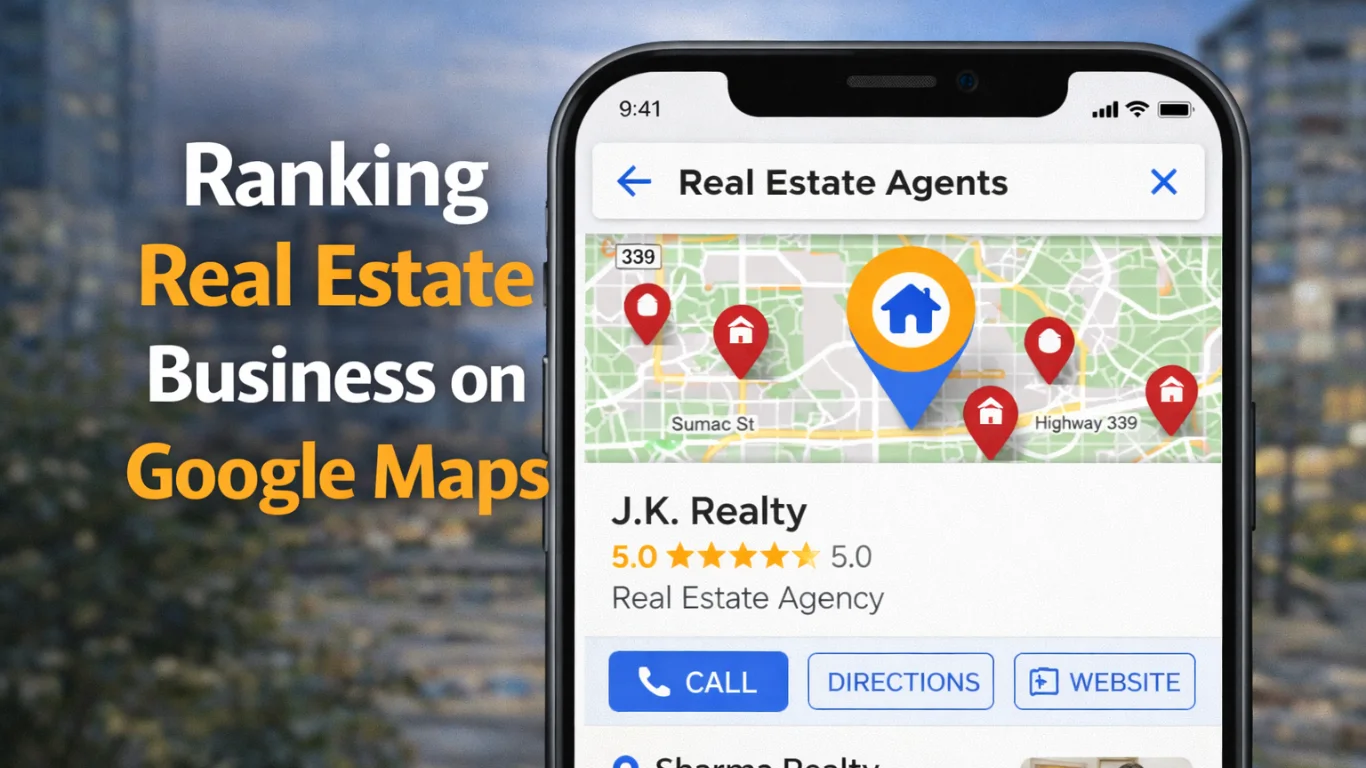
Ranking Real Estate Business on Google Maps: How to Get More Calls from Local Search When someone searches for a real estate agent, they often do not scroll through websites first. They look at Google Maps. They check who is nearby, read reviews, view photos, and make a call. In many cases, the decision happens without even visiting a website. This is why ranking a real estate business on Google Maps has become one of the most important parts of local visibility. It puts your business in front of buyers and sellers at the exact moment they are ready to act. This guide explains how Google Maps rankings really work for real estate, why many agents struggle to appear, and how Maps SEO connects with your broader real estate SEO strategy. Why Google Maps Rankings Matter for Real Estate Real estate is driven by location and trust. Buyers and sellers want someone close to them. Google understands this and prioritizes map results for local intent searches. When your business appears in the Google Maps results, you gain instant visibility. Calls from Maps usually come from people with high intent. They are not browsing. They are deciding. This makes Maps one of the fastest channels for generating leads and a key part of how real estate SEO generates leads at the local level. How Google Decides Which Real Estate Businesses Rank on Maps Google does not rank businesses randomly. Maps rankings are based on relevance, proximity, and trust. While proximity cannot be controlled, relevance and trust can be strengthened. Google looks at how clearly your business matches the search, how consistent your information is, and how much confidence it has in your brand. This is why Maps rankings depend on more than just a profile. They depend on how your entire online presence works together, especially Real estate business for local seo. Google Business Profile Is the Starting Point Your Google Business Profile is the foundation of Maps SEO. Before ranking your business, Google checks whether your profile is complete, accurate, and active. Users do the same. They look for recent photos, clear service details, and genuine reviews. An outdated or incomplete profile sends a negative signal. Your website, profile, and business information must align. When this happens, Google is more confident in showing your business for local searches. This alignment is critical for Real estate seo for Google map. Your Website Plays a Bigger Role Than Most Agents Think Some real estate agents believe Maps rankings work without a strong website. That belief often limits growth. Your website validates your Google Business Profile. Location pages, service explanations, and local content help Google confirm that your business actually serves the areas shown in Maps. This is where website SEO for real estate supports Maps rankings. A weak website leads to unstable visibility. A strong website stabilizes rankings over time. Reviews Are a Trust Signal, Not Just Social Proof Reviews influence how users feel, but they also influence how Google evaluates trust. Google looks at review quality, frequency, and engagement. A steady flow of real reviews sends a strong signal that your business is active and reliable. Responding to reviews matters as well. It shows professionalism and ongoing activity. Reviews are one of the most overlooked parts of real estate SEO fundamentals, yet they play a major role in Maps visibility. Why Some Real Estate Businesses Stay Stuck on Page Two of Maps Many businesses do the basics but stop there. They create a profile, add a few photos, and expect results. Over time, nothing changes. Common reasons Maps rankings stall include inconsistent business details, weak website support, copied service descriptions, and inactive profiles. Google Maps SEO rewards consistency and clarity, not shortcuts. How Google Maps SEO Fits into the Bigger SEO Picture Google Maps SEO should never be treated as a separate tactic. It works best when connected with website SEO, local content, and internal linking. Your Maps visibility strengthens when Google sees a clear topical structure across your site. This is why Maps SEO should always link back to your complete real estate SEO guide and supporting cluster content. When everything supports the same message, rankings become more stable. How OptinMark Helps Real Estate Businesses Rank on Google Maps At OptinMark, Google Maps SEO is treated as a trust-building system, not a quick fix. We focus on aligning your Google Business Profile with your website content, strengthening local relevance, and improving trust signals naturally. The goal is not short-term visibility. The goal is consistent calls from nearby buyers and sellers. Our Maps-focused work supports real estate SEO services and website SEO services for real estate, creating long-term local visibility instead of temporary spikes. Ranking a real estate business on Google Maps is about more than showing up. It is about being trusted when it matters most. When Google understands your location, services, and credibility, your business appears more often and converts faster. For real estate, Maps visibility is no longer optional. It is a core growth channel. Every market is different. Every business has different challenges. If you want clarity on why your real estate business is not ranking on Google Maps and what to fix first, start with a clear review. 👉 free SEO audit for real estate agentsWe’ll show you what’s limiting your Maps visibility and how to improve it safely. Contact Section Let’s get in touch Have a project in mind? Let’s get to chat. WhatsApp Now Call Us Now Email Us Now

Real Estate SEO Services

Real Estate SEO Services

Real Estate SEO Services: How OptinMark Helps You Generate Buyer and Seller Leads Most real estate businesses know they need SEO. What many don’t know is why their SEO efforts fail or bring weak results. Real estate SEO is not the same as SEO for other industries. It is local, trust-driven, and highly competitive. Buyers and sellers take time to decide, and they research heavily before making contact. Real estate SEO services only work when they are built around how people actually search and how Google evaluates trust. At OptinMark, SEO is treated as a long-term growth system, not a short-term ranking tactic. This page explains what real estate SEO services really include, how they work, and why businesses choose a structured approach instead of random optimization. What Real Estate SEO Services Actually Mean Real estate SEO services are not about pushing a few keywords onto your website. They are about positioning your business where buyers and sellers look before they choose an agent. This includes visibility in organic search, local search, and Google Maps. It also includes building trust through content, structure, and consistency. A strong SEO setup connects your website, location relevance, and authority signals into one clear message for Google and users. That message supports a complete real estate SEO strategy, not just rankings. Why Real Estate SEO Requires a Different Approach Real estate searches have high intent and high value. A single lead can turn into a long-term client or a high-value transaction. Because of this, competition is intense. Generic SEO methods do not work well here. Real estate SEO must focus on: Location relevance Buyer and seller intent Trust signals Long-term visibility This is why real estate SEO services must be connected to how real estate SEO generates leads, not just traffic numbers. Website SEO Is the Foundation of Real Estate SEO Services Your website is the core asset in any SEO strategy. If the website structure is weak, SEO becomes unstable. Pages fail to rank, or traffic doesn’t convert. Website SEO focuses on making your site clear, relevant, and easy to understand. This includes service pages, location pages, internal linking, and content that answers real questions. Strong website SEO for real estate supports every other SEO effort, including local and Maps visibility. Local SEO Services for Real Estate Businesses Local SEO ensures your business appears when people search nearby. Buyers and sellers often search using city names, neighborhoods, or “near me” phrases. If your local signals are weak, you miss these searches completely. Local SEO services focus on location pages, consistent business details, and local relevance. This work supports local GMB SEO for real estate businesses and helps Google understand exactly where you operate. Google Maps SEO as Part of Real Estate SEO Services Google Maps is often the first place people interact with real estate businesses. Maps results appear before websites, and many users call directly from the Google map listing. SEO services must include Google Business Profile optimization, review management guidance, and alignment between your profile and website. This approach strengthens Local SEO for real estate and improves your chances of ranking real estate business on Google Maps consistently. Content That Builds Trust Before the First Call Content is not written to fill pages. It is written to build confidence. Buyers and sellers want clarity before they talk to anyone. Good content explains the process, sets expectations, and answers common fears. SEO content supports real estate SEO fundamentals by increasing time on site, improving engagement, and reinforcing authority. This is one of the biggest differences between low-quality SEO and real SEO services. Why Cheap Real Estate SEO Services Usually Fail Many businesses try SEO once and give up. In most cases, the issue is not SEO. It is the quality of the service. Cheap SEO often relies on copied pages, weak content, and shortcuts. These methods might show short-term movement, but they rarely produce stable leads. Real estate SEO Ranking requires patience, consistency, and strategy. Anything promising instant rankings usually collapses later. How OptinMark Delivers Real Estate SEO Services At OptinMark, real estate SEO services are built around clarity and long-term growth. We start by understanding how buyers and sellers search in your market. Then we structure your website, content, and local signals to match that behavior. The goal is not just rankings. The goal is qualified leads who already trust your business. Our work connects: Website SEO Local SEO Google Maps SEO Conversion clarity This is why our SEO services support Real Estate website seo service and long-term visibility, not temporary spikes. How to Know If Real Estate SEO Services Are Working SEO should not feel confusing. Progress shows up as: Better quality leads More consistent inquiries Improved local visibility Lower cost per lead over time SEO works quietly but compounds steadily. The longer it runs correctly, the stronger the results become. Real estate SEO services are not about tricks or shortcuts. They are about building an asset that grows over time. When SEO is done properly, your business becomes visible before buyers and sellers are ready to choose. That timing makes all the difference. The right SEO service builds trust first and leads second. Want to See If Real Estate SEO Is Right for Your Business? Every market is different. Every website is different. If you want to understand how SEO can realistically work for your real estate business, start with clarity. 👉 free SEO audit for real estate agentsWe’ll show you where you stand and what kind of SEO investment makes sense for your goals. Contact Section Let’s get in touch Have a project in mind? Let’s get to chat. WhatsApp Now Call Us Now Email Us Now
How Much Does Real Estate SEO Cost?

How Much Does Real Estate SEO Cost?

How Much Does Real Estate SEO Cost? A Clear Breakdown for 2026 One of the first questions real estate business owners ask is simple. “How much does real estate SEO cost?” The problem is that most answers online are vague, confusing, or unrealistic. Some promise cheap results. Others throw large numbers without explaining what you actually get. Real estate SEO is not a fixed product. The cost depends on your market, competition, goals, and how serious you are about long-term growth. This guide explains what real estate SEO really costs, what affects pricing, and how to judge whether you are investing wisely or wasting money. Why Real Estate SEO Pricing Feels Confusing SEO pricing feels unclear because many agencies sell SEO as a package instead of a process. Real estate SEO is more complex than most industries. It is local, competitive, and trust-driven. Ranking a real estate website is not the same as ranking a small service site. Costs vary because: Competition differs by city Buyer and seller intent is high-value Local SEO and Maps SEO require ongoing work This is why understanding real estate SEO strategy matters more than chasing the lowest price. What You Are Actually Paying for in Real Estate SEO When you pay for SEO, you are not paying for rankings. You are paying for work. Real estate SEO cost usually covers research, planning, execution, and ongoing optimization. This includes understanding how buyers and sellers search, building location-focused content, improving website structure, strengthening Google Business Profile signals, and maintaining trust signals over time. This is how SEO supports how real estate SEO generates leads, not just traffic. Average Cost of Real Estate SEO (Realistic Ranges) Most professional real estate SEO services fall into a monthly range. Lower-cost SEO usually focuses only on basics and has limited impact in competitive markets. Mid-range SEO focuses on local authority, content, and consistent improvement. Higher-end SEO is common in major cities where competition is intense and results require sustained effort. The key point is this:Cheap SEO rarely works in real estate. And expensive SEO only works when the strategy is right. What Increases the Cost of Real Estate SEO Some real estate businesses need more work than others. SEO cost increases when: You are in a highly competitive city Your website is weak or outdated You need multiple location pages to Rank on google my business map Google Maps visibility is poor Markets with high buyer and seller activity require deeper SEO investment. This is especially true when local SEO for real estate businesses and Google Maps SEO for real estate are both priorities. One-Time SEO vs Monthly SEO: What’s Better? One-time SEO setups usually include audits and fixes. They help, but they don’t maintain growth. Real estate SEO works best as an ongoing process. Search behavior changes. Competition adapts. Google updates frequently. Monthly SEO allows continuous improvement of: Content relevance Local rankings Trust signals Conversion paths This approach aligns better with website SEO for real estate and long-term lead generation. Why Cheap SEO Often Fails in Real Estate Many agents try SEO once and quit without knowing Real estate seo fundamentals. Usually, the problem is not SEO itself. It’s the quality of work. Cheap SEO often relies on: Generic content Copied location pages Low-quality links No real local focus Google detects these shortcuts easily. Real estate SEO requires credibility. Without it, rankings disappear or never arrive. How to Measure SEO Cost Against ROI The real question is not “How much does SEO cost?”It is “What does SEO return?” A single seller lead can be worth thousands. One closed deal can cover months of SEO cost. SEO should be measured by: Lead quality Consistency Cost per lead over time When SEO is done properly, cost per lead drops while lead quality improves. This is why many businesses shift budget from ads to SEO once results stabilize. How OptinMark Prices Real Estate SEO (Philosophy, Not Numbers) At OptinMark, SEO pricing is based on effort, not promises. We assess: Your market competition Your current website Your local visibility Your growth goals Then we build an SEO plan that supports SEO Service for Realtor and Real estate Website seo service in a realistic way. No shortcuts. No inflated claims. Just steady, measurable progress. Is Real Estate SEO Worth the Cost? For businesses that rely only on portals or ads, SEO brings stability. SEO builds an asset you control.Ads stop when spending stops.SEO compounds. If your goal is long-term visibility, predictable leads, and lower dependency on paid traffic, SEO is worth the investment. If you want instant results with no patience, SEO is not the right channel. Want to Know What Real Estate SEO Would Cost for You? Every market is different. Every website is different. If you want a clear idea of what SEO would realistically cost for your real estate business, start with clarity. 👉 free SEO audit for real estate agentsWe’ll show you what your market demands and what level of SEO investment makes sense. Contact Section Let’s get in touch Have a project in mind? Let’s get to chat. WhatsApp Now Call Us Now Email Us Now
Google Maps SEO for Real Estate

Google Maps SEO for Real Estate

Google Maps SEO for Real Estate: How Agents Get More Local Calls When someone searches for a real estate agent, they don’t always click a website first. Very often, they look at Google Maps. They see nearby agents, read reviews, check photos, and make a call without visiting a website at all. This is why Google Maps SEO for real estate is no longer optional. It is one of the fastest ways to attract local buyers and sellers who are ready to take action. This article explains how Google Maps SEO actually works for real estate businesses, why many agents fail to rank, and how it connects with your broader real estate SEO strategy. Why Google Maps Matters So Much for Real Estate Real estate is location-driven. Buyers and sellers want someone nearby who understands their area. Google understands this intent. That’s why map results appear at the top for searches like: real estate agent near me property dealer in my area sell my house nearby When your business appears in Google Maps, visibility is immediate. Calls often happen without comparison or long research. This makes Maps one of the highest-intent lead sources in real estate. It directly supports how real estate SEO generates leads at the local level. What Google Maps SEO Really Is (And What It Is Not) Google Maps SEO is not about tricks or keyword stuffing in your profile. It is about helping Google confidently answer one question:“Is this a trustworthy real estate business for this location?” You can also check google business profile guideline for more detail before start working on it. Google looks at three main signals: Relevance Distance Trust Your job is not to manipulate these signals. Your job is to support them clearly and consistently across your online presence. This is why Google Maps SEO must work together with local SEO for real estate businesses and your website, not separately. Google Business Profile Is the Core of Maps SEO Your Google Business Profile is the foundation of Maps rankings. Before ranking you, Google checks whether your profile is complete, accurate, and active. Buyers and sellers do the same. They look at: Services offered Reviews Photos Business activity An inactive profile suggests inactivity. An updated profile builds confidence instantly. Your website content and profile details must match. When services, locations, and messaging align, Google understands your business better and ranks it more often. This alignment is essential for Real estate Ranking business on Google Maps consistently. Website SEO Supports Google Maps Rankings Many agents think Google Maps works without a website. That’s a mistake. Your website validates your profile. Location pages, service pages, and local content help Google confirm that your business actually serves the area shown in Maps. This is where website SEO for real estate plays a supporting role. When your site clearly explains your services and locations, Maps rankings become more stable. Weak websites often lead to unstable Maps visibility. Reviews Are Not Just Social Proof Reviews influence both trust and rankings. Google looks at: Review quality Review consistency Business responses A profile with recent, genuine reviews sends strong trust signals. Responding to reviews shows activity and professionalism. For real estate, reviews often mention location, experience, and results. These details reinforce local relevance naturally. Reviews are one of the most overlooked parts of real estate SEO fundamentals, yet they strongly impact Maps performance. Proximity Can’t Be Controlled, Trust Can You cannot change where your office is located. But you can control trust. Google often ranks slightly farther businesses higher if they show stronger trust signals. That trust comes from: Consistent business information Active profiles Helpful website content Real reviews This is why Maps SEO is not just about distance. It’s about credibility. Common Mistakes That Hurt Google Maps Rankings Many real estate businesses hurt their own Ranking and visibility without realizing it. Common issues include: Incomplete profiles Mismatched business details Ignoring reviews Copying service descriptions These mistakes confuse Google and reduce confidence. Google Maps SEO rewards clarity, not shortcuts. How Google Maps SEO Fits Into Your Overall SEO Strategy Google Maps SEO should never stand alone. It works best when connected to: Your website structure Local content Location pages Reviews and citations This connection strengthens your complete real estate SEO guide approach instead of creating isolated efforts. Maps visibility improves faster when all signals point in the same direction. How OptinMark Approaches Google Maps SEO for Real Estate At OptinMark Agency, Google Maps SEO is treated as a trust-building system. We focus on: Aligning Google Business Profile with website content Strengthening local relevance through pages and content Improving review signals naturally Creating consistency across all local touchpoints The goal is not short-term ranking spikes.The goal is stable visibility that brings real calls. This approach works alongside SEO Service for Real estate and Real estate website seo service, not as a separate tactic. Google Maps SEO is one of the fastest ways to attract local real estate leads. Good investment good Return The cost of Real estate seo is Depend on how much business you want to generate from market. When done correctly, it places your business in front of people who are already searching nearby and ready to act. For real estate businesses, Maps visibility often turns into phone calls before any website visit happens. That is why Google Maps SEO deserves focused attention in your marketing strategy. Want to Know If Your Google Maps SEO Is Working? If you are unsure whether your business is visible on Google Maps when it matters most, clarity is the first step. 👉 free SEO audit for real estate agentsWe’ll show you how your Maps presence performs and what’s holding it back. Contact Section Let’s get in touch Have a project in mind? Let’s get to chat. WhatsApp Now Call Us Now Email Us Now
Local SEO for Real Estate

Local SEO for Real Estate

Local SEO for Real Estate: How to Get Found by Buyers and Sellers Near You Real estate is a local business. No matter how strong your brand is, most of your buyers and sellers still search based on location. They want an agent who understands their city, their neighborhood, and their market. This is where local SEO for real estate becomes critical. Local SEO is not about ranking everywhere. It is about showing up at the exact moment someone nearby is ready to buy or sell. When done correctly, local SEO brings highly qualified leads who already have intent. This guide explains how local SEO actually works for real estate businesses, why many agents struggle with it, and how it connects with your overall real estate SEO strategy. Why Local SEO Matters More Than Ever for Real Estate Buyer and seller behavior has changed. People no longer search in general terms only. They search with location, urgency, and context. They want answers that feel local and relevant. A seller does not want “real estate services.”They want the best agent in their area. A buyer does not want generic listings.They want homes in a specific neighborhood. Local SEO places your business inside these searches. Without it, your website and Google profile remain invisible to people who are actually nearby and ready to act. This is why local SEO is a core part of how real estate SEO generates leads, not an optional add-on. https://youtu.be/fJP5wQ75nGo What Local SEO Really Means for Real Estate Businesses Local SEO for real estate is not just about adding a city name to a page. It is about proving relevance, proximity, and trust to Google and users. Google looks for signals that show: You operate in a real location You serve a specific area People trust your business These signals come from your website, your Google Business Profile, your content, and how consistently your business information appears online. Local SEO works when all of these elements support each other instead of existing separately. Google Business Profile Is the Center of Local SEO Your Google Business Profile is often the first thing buyers and sellers see. Before visiting your website, people check: Your location Reviews Photos Activity A weak or inactive profile sends the wrong message. An optimized profile builds instant trust. For real estate businesses, Google Business Profile plays a major role in Google Maps SEO for real estate, especially for searches that lead directly to phone calls. Your website and profile must match in services, locations, and messaging. When they align, Google understands your business better and shows it more often. Location Pages Are the Foundation of Local Website SEO A single “Real Estate Services” page is not enough. Local SEO requires location-specific pages that feel real and useful. A strong location page explains: The area you serve What buyers and sellers should expect locally Market factors that matter in that location Thin or copied location pages hurt rankings. Google can detect them easily. When done properly, location pages strengthen website SEO for real estate and support both organic rankings and Google Maps visibility. Local Content Builds Trust Before Contact Local SEO is not only about rankings. It is about trust. Buyers and sellers want to feel confident before calling an agent. Local content helps with that. This includes explaining: Local pricing trends Neighborhood differences Common buyer or seller mistakes in that area Content like this shows experience. Google values it, and users trust it. This is how content supports real estate SEO fundamentals instead of just filling pages. Reviews and Trust Signals Matter in Local Rankings Reviews are not only for reputation. They influence local visibility. Google looks at: Review quality Review frequency Responses from the business A steady flow of real reviews sends strong trust signals. Local SEO works best when reviews, website content, and Google Business Profile all tell the same story. This consistency helps with Real estate Ranking business on Google Maps and converting views into calls. NAP Consistency and Local Citations Still Matter NAP means Name, Address, and Phone number. If your business details are inconsistent across platforms, Google gets confused. Local citations help confirm that your business is real and active in a specific location. These listings should match your website and Google Business Profile exactly. While citations alone will not rank you, they support the foundation of local SEO and reduce trust issues. Local SEO Is Not Separate from Website SEO A common mistake is treating local SEO and website SEO as two different tasks. They are connected. Your website explains your expertise.Your Google profile proves your location.Your content builds trust. Together, they create a strong local presence. This is why local SEO should always connect back to your complete real estate SEO guide instead of running in isolation. https://youtu.be/xzf801y90E0 Why Many Real Estate Businesses Struggle with Local SEO Most problems come from shortcuts. Some businesses rely only on portals. Some copy location pages. Some ignore their Google profile. Others expect instant results. Local SEO takes consistency, not tricks. When done properly, results compound over time. Rankings stabilize. Calls increase. Cost per lead drops. Its Depend on Investment in Real estate seo or Advertisement. How OptinMark Approaches Local SEO for Real Estate At OptinMark Agency, local SEO is built around real search behavior. We focus on: How buyers and sellers search locally What Google needs to trust a real estate business How website structure supports local intent The goal is not visibility everywhere.The goal is visibility where it matters. Our approach ensures local SEO works alongside real estate SEO services and website SEO services for real estate, not against them. Final Thoughts Local SEO is not about being everywhere. It is about being visible to the right people at the right time. For real estate businesses, that means showing up when someone nearby is ready to buy or sell. When local SEO is done correctly, your business becomes familiar before the first call. That familiarity converts. Want to

Website SEO for Real Estate

Website SEO for Real Estate

Website SEO for Real Estate: How to Turn Your Website into a Lead Asset Most real estate websites look good on the surface. They have clean design, property listings, and contact details. Yet very few of them generate consistent leads from Google. The problem is not the website itself. The problem is how search engines and users experience that website. Website SEO for real estate is not about tricks or technical jargon. It is about making your site useful, trustworthy, and easy to understand for both Google and real people. When done correctly, website SEO becomes a long-term lead asset, not just an online brochure. This article explains how website SEO actually works for real estate, why most sites fail, and how it fits into a broader real estate SEO strategy. Why Real Estate Websites Struggle to Rank Many real estate businesses invest in a website once and assume the job is done. Over time, the site becomes outdated, shallow, and disconnected from how buyers and sellers actually search. Pages often target no real intent. Content stays generic. Location relevance is missing. The site looks fine, but it does not answer real questions. Google does not rank websites for effort. It ranks them for usefulness. If your site does not clearly help buyers or sellers make decisions, Google has no reason to prioritize it. This is where how real estate SEO generates leads becomes important. Rankings follow clarity, not design. Website SEO Starts with Search Intent, Not Design Design matters, but SEO does not start with design. It starts with understanding intent. As per Real Estate Research Data from Indian brand Equity Foundation ( IBEF) Demand is Increase in This industry. Buyers and sellers rarely search for an agency name. They search for problems, situations, and locations. They want clarity before commitment. They search to understand pricing, timelines, risks, and local conditions. A real estate website must be structured around these searches. Website SEO works best when pages exist because someone is already searching for them, not because they “should” exist on a menu. This approach aligns website structure with the complete real estate SEO guide approach instead of surface-level optimization. Location Pages Are the Backbone of Real Estate Website SEO Real estate is local by nature. According to Optinmark Agency Experience A single generic service page cannot capture local search demand. Strong location pages explain the area, lifestyle, buyer demand, seller expectations, and factors that influence property decisions. They feel real, not copied. When location pages are thin or duplicated, rankings drop. When they are detailed and helpful, Google responds positively. This is also where local SEO for real estate businesses connects directly with website SEO. Your website must support local intent clearly before Google Maps visibility becomes possible. Content Is What Builds Trust on a Real Estate Website Listings alone do not build trust. They change, expire, and do not answer deeper questions. Content does. A website that ranks well explains the process clearly. It helps buyers avoid mistakes and helps sellers set realistic expectations. It guides instead of pushing. When content answers real questions honestly, visitors stay longer. Google reads that behavior as a quality signal. Rankings improve naturally. This is why content-led website SEO supports the real estate SEO fundamentals instead of relying only on listings. Technical SEO Matters, But Only After the Basics Technical SEO helps, but it cannot save a weak website. Speed, mobile usability, and structure matter, but they come after clarity. Search engines forgive small technical flaws if content is strong and relevant. For real estate websites, simple technical hygiene combined with strong intent-based pages works far better than over-engineered SEO setups. Internal Linking Shapes How Google Understands Your Website Many real estate websites have pages that exist in isolation. Google struggles to understand which pages matter most when nothing connects logically. Internal linking solves this. When buyer guides link to service pages, and location pages link to city pages, search engines understand hierarchy and relevance. Users also move more naturally from information to action. Internal linking strengthens both SEO and conversions. This structure becomes even stronger when connected to Google Maps SEO for real estate, where website authority supports map rankings. Google Business Profile and Website SEO Must Work Together A common mistake is treating Google Business Profile and website SEO as separate tasks. They are deeply connected. Your website supports your profile, and your profile reinforces your website. When content, locations, and services match across both, trust increases. This connection plays a major role in ranking real estate business on Google Maps and converting local search traffic into calls. Conversion Matters as Much as Rankings Traffic without action is noise. A real estate website should guide users toward the next step without pressure. That step could be a call, a form, or a consultation request. When pages explain value clearly and make contact easy, conversions increase without needing more traffic. This is where real estate SEO services must align with website structure, not just rankings. Why Website SEO Is a Long-Term Advantage Paid ads stop when the budget stops in Real-estate Advertisement. Portals change rules. Social reach declines. Your website is the only asset you fully control. When website SEO is done correctly, old content keeps working. Location pages grow stronger. Cost per lead drops over time. This is why serious businesses treat website SEO as a long-term growth system, not a one-time task. How OptinMark Approaches Website SEO for Real Estate At OptinMark, website SEO is not treated as a checklist. It is treated as a business strategy. We focus on how buyers and sellers actually search, then build website structure and content to match that behavior. Local relevance, clarity, and trust come first. Our goal is simple. Turn your website into a consistent source of qualified leads through website SEO services for real estate, not temporary traffic spikes. Final Thoughts A real estate website should do more than exist. It should explain, guide, and build confidence. Website

Why SEO Is Important for Real Estate Business in 2026

Why SEO Is Important for Real Estate Business in 2026

Why SEO Is Important for Real Estate Business in 2026 Real estate has always been competitive. In 2026, it will be competitive in a very different way. It will not be about who spends more on ads. It will not be about who posts the most listings. And it will not be about who shouts louder online. In 2026, real estate businesses will win or lose based on visibility, trust, and timing. SEO sits at the center of all three. This article explains why SEO is no longer optional for real estate businesses in 2026, what has changed in buyer and seller behavior, and how SEO fits into a serious growth strategy. The Real Estate Buyer and Seller Have Changed A few years ago, many buyers started with a phone call, and many sellers relied on referrals or local boards. That behavior is fading. Buyers and sellers today spend more time researching prices, market trends, and future outlook before making a decision. This shift is also reflected in national housing data, which shows increasing focus on market trends, affordability, and long-term planning by homebuyers and investors. A buyer does not search just once. A seller does not decide in a day. They search things like whether it is a good time to buy property in their area, who the best agent is to sell a home, what property prices look like in a neighborhood, and how long homes usually take to sell. If your real estate business is not visible during this research phase, you are invisible where it matters most. SEO places your brand inside these early decisions. Why Paid Ads Alone Will Not Be Enough in 2026 Many real estate businesses still rely heavily on paid ads. Ads feel fast and controllable. But in 2026, ads come with problems. Costs are higher. Trust is lower. Competition is stronger. The moment you stop paying, visibility stops. Optinmark agency work with many Real estate and know this More importantly, buyers and sellers trust organic results more than ads. Organic rankings feel earned. Ads feel purchased. SEO builds long-term visibility that does not disappear overnight. For real estate businesses that want stability, SEO becomes the foundation. SEO Is About Trust, Not Just Rankings SEO used to be treated as a technical game. Rank higher, get traffic. In 2026, SEO is about trust signals. Google rewards pages that answer real questions, show local understanding, demonstrate experience, and help users make decisions. real estate SEO Strategy matters deeply. People choose agents who feel knowledgeable and reliable. SEO allows your business to educate buyers, guide sellers, and build confidence before the first call. By the time someone contacts you, trust already exists. Local SEO Will Decide Who Gets the Call Real estate is local by nature, and that will never change. But local SEO in 2026 goes far beyond ranking for a city name. Buyers and sellers search by neighborhoods, lifestyle needs, commute time, and amenities. They want information that feels specific and relevant. Real estate businesses that invest in city pages, area guides, community content, and Google Business Profile optimization will appear when intent is highest. SEO helps you own local intent instead of renting attention through ads. Content Is the New Salesperson In 2026, content replaces the first meeting. Before someone talks to you, they read you. They judge your business by how clearly you explain things, how honest your advice feels, and how well you understand the local market. SEO-driven content is not about publishing blogs for traffic. It is about answering the exact questions buyers and sellers are afraid to ask. When your content provides clarity, your brand becomes familiar. Familiarity converts. Google Business Profile Will Drive Direct Leads In 2026, Google Business Profile will matter as much as your website. People search on Maps, read reviews, and call directly. A neglected profile sends the wrong message. An active, accurate profile builds instant trust. SEO ensures your profile ranks well, your information stays correct, and your reviews support your authority. For many real estate businesses, this becomes a major lead source. SEO Strengthens Every Other Marketing Channel SEO is often treated as a separate activity, but it strengthens everything else. Strong SEO improves paid ads by lowering landing page friction. It supports social media by giving you meaningful content to share. It improves email marketing by building authority. Without SEO, other channels work harder. With SEO, every channel performs better. SEO Helps You Compete With Large Portals Large real estate portals dominate listings. Competing with them directly is difficult. SEO gives local businesses a different advantage. Portals are broad. Agents are specific. SEO allows you to focus on local expertise, long-tail searches, and personal authority. Instead of fighting portals, you stand out beside them. What Happens If You Ignore SEO in 2026 Ignoring SEO does not break your business overnight. It weakens it slowly. Over time, lead costs increase. Dependence on ads grows. Brand visibility fades. SEO creates consistency. Without it, growth depends on constant spending. How SEO Fits Into a Smart Real Estate Strategy SEO should not be rushed. It should be planned. A strong strategy includes a website built for local intent, content that educates buyers and sellers, location pages that feel real, and clear paths for conversion. At OptinMark, SEO is treated as a business system, not a checklist. The goal is not traffic. The goal is qualified leads who already trust you. Final Thoughts In 2026, real estate businesses will not win by chasing every trend. They will win by building assets that compound. SEO is one of those assets. It builds visibility, trust, and consistency. Most importantly, it places your business in front of buyers and sellers before they choose someone else. Why Real Estate Businesses Choose OptinMark At OptinMark, we do not treat SEO as a technical task. We treat it as a growth strategy. We focus on real search behavior, local intent, buyer and seller psychology, and long-term lead generation. SEO should

Real Estate SEO vs Paid Ads: Which Brings Better Leads?

Real Estate SEO vs Paid Ads: Which Brings Better Leads?

Real Estate SEO vs Paid Ads: Which Brings Better Leads? Real estate agents want leads. Buyers, sellers, and real conversations. Online, two methods are used most often to get leads: SEO and paid ads. Both can work, but they work in very different ways. One builds results slowly and lasts longer. The other works fast but stops when the budget ends. This guide explains the real difference between real estate SEO and paid ads. You will learn which one brings better leads and when to use each. What Real Estate SEO Really Is SEO helps your website appear on Google without paying for every click. In real estate SEO Agency by showing your site when people search for agents, homes, or selling advice in a specific area. Guide on Real estate SEO focuses on content, location pages, Google Business Profile, and trust signals. When done right, it brings traffic every day without extra cost per visitor. SEO takes time, but once it starts working, it keeps delivering leads. What Paid Ads Mean for Real Estate Paid ads are ads you pay for on platforms like Google, Facebook, or Instagram. Your ad appears as soon as you launch a campaign. Paid ads work fast. You can get clicks and inquiries the same day. But there is one downside. When you stop paying, traffic stops immediately. Ads are useful for quick exposure, promotions, or listing campaigns. They are not a long-term solution by themselves. How Lead Quality Is Different This is where the biggest difference shows. SEO leads usually search with intent. They read content, compare agents, and take time before contacting you. These leads are slower but warmer. Trust is built before the call. Paid ad leads often act faster. Some are serious. Some are just browsing. These leads need quick follow-up, or they move on to another agent. In real estate, trust matters. SEO builds trust early. Ads rely more on speed. Cost Difference Between SEO and Paid Ads SEO costs include content creation, website improvements, and local optimization. You pay for the work, not for each click. Over time, the cost per lead usually goes down. Paid ads charge for every click. In real estate, clicks are expensive, especially for buyer and seller keywords. If ads are not managed well, money can be spent quickly without results. SEO is an investment that grows. Paid ads are an ongoing expense. Speed vs Stability Paid ads win when it comes to speed. You launch today and see traffic today. SEO is slower. Content needs time to rank, and trust builds gradually. But once SEO gains momentum, traffic becomes stable and consistent. Ads stop the moment you pause the budget. SEO keeps working. Control and Predictability Paid ads offer more control. You choose the budget, audience, and timing. You can pause or adjust campaigns anytime. SEO gives less direct control. Rankings depend on Google. Updates can affect results. But when SEO is done properly, results become predictable over time. Good SEO rewards quality and consistency. Local Advantage in Real Estate Real estate is local by nature. SEO is built for local searches like city pages, area guides, and Google Maps results. Paid ads can target locations too, but many users skip ads and click organic results instead. For local trust and authority, SEO often performs better. Long-Term Results Comparison SEO builds authority over time. Content keeps working even months or years later. Traffic grows slowly but compounds. Paid ads need constant spending. Costs often rise as competition increases. Once the budget stops, results disappear. SEO is designed for long-term growth. Ads are short-term by nature. Common Mistakes Agents Make Many Real estate agents do mistake choose only one method. This often leads to problems. Relying only on ads creates high costs and pressure to close fast. Relying only on SEO can feel slow at the beginning. The best approach is balance. SEO builds the foundation. Paid ads support growth when needed. Which One Brings Better Seller Leads? Seller leads usually require more trust. Sellers research more and compare agents carefully. SEO works very well for sellers through guides, blogs, and local expertise pages. Paid ads can work too, but they often cost more. In most cases, SEO brings higher-quality seller leads. Which One Works Better for Buyers? Buyers move faster. Paid ads can capture buyer attention quickly. SEO also works well through area pages, property guides, and market updates. For buyers, both SEO and paid ads can work. Ads help speed. SEO helps trust. When SEO Is the Better Choice SEO is the better choice when you want long-term leads, lower cost per lead over time, and strong local authority. It suits agents who think beyond quick wins and want steady growth. When Paid Ads Make Sense Paid ads are useful when you need fast leads, promote listings, launch a new website, or test a new market. Ads work best as a support channel, not the main strategy. SEO vs Paid Ads: Simple Summary SEO brings slower but lasting results. It builds trust and reduces cost over time. Paid ads bring fast results but need constant spending. Both work better together than alone. Final Thoughts The real question is not SEO or paid ads. The real question is how to balance both. SEO builds your presence and authority. Paid ads help you move faster when needed. For most real estate agents, SEO delivers better long-term buyer and seller leads. Want to Know What Will Work Best for You? Every market is different. The right mix depends on your location, competition, and goals. 👉 Get a Free Real Estate SEO AuditSee how SEO and paid ads can work together for your business.

OptinMark is a results-driven digital marketing agency dedicated to helping businesses thrive in the digital landscape.

Marketing partners
Marketing partners 2

Get Directions

© 2025 powered By OptionMark